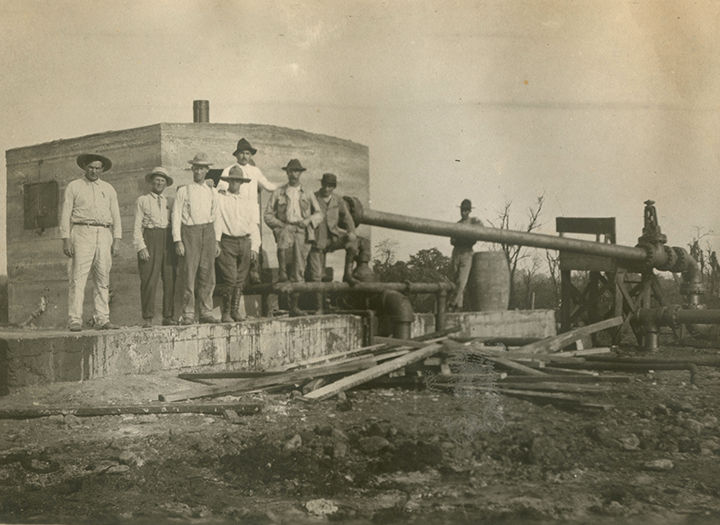
The Beverly Hillbillies was a mid-twentieth century American television program centered on the Clampett family. In the opening credits, a backwoods mountaineer named Jed Clampett fires a rifle into the ground while hunting for food. Instead of a rabbit, he strikes a subterranean reservoir of oil. This black gold transforms him into an overnight millionaire, prompting the family to load their belongings onto a dilapidated truck and move to a mansion in California. The humor derived from the fundamental mismatch between their primitive habits and the sophisticated luxury of their new surroundings. It was a weekly ritual of watching people who barely understood a thermostat suddenly commanding the riches of the earth.
This narrative is a metaphor for the entirety of modern industrial history. Like Jed, humanity spent millennia poking at the dirt with sticks until we accidentally punctured the crust and found a concentrated liquid battery. We did’t get smarter or more evolved. Our biology is the same as our hunter gatherer ancestors. We simply found a way to outsource our labor to the chemical ghosts of Paleozoic plankton. Energy experts estimate a single barrel of oil contains the equivalent of between 10.5 to 12.5 years of continuous human labor. Our technological architecture is less a monument to human genius and more a series of elaborate ways to burn stuff and increase entropy. An MIT physicist has even proposed the provocative idea that life exists because the law of increasing entropy drives matter to acquire lifelike physical properties. The human organism is thus dutifully increasing entropy by transforming dense energy from the sun into heat.
The sheer density of energy found in fossil fuels subsidized a fabulous lifestyle that would have seemed supernatural to our ancestors. The average person in a post-industrial society today has a better standard of living than pre-industrial royalty. This incredible bounty has allowed us to build cities in deserts and fly metal tubes through the sky. We like to assume our cleverness was the engine of innovation, but we have to ask: are we not just riding a massive wave of ancient sunlight? Much like the Clampetts trying to navigate high society, we have built a complex civilization on top of a finite geological lottery win without a plan of what to do when the well runs dry.
The greatest trick of modern economic theory was convincing the world that our modern era is weightless. This narrative assumes that value is generated by “ideas,” “algorithms,” and “innovative thinking,” decoupled from thermodynamics. It’s a charming story. It suggests that human ingenuity has finally transcended its terrestrial shackles, to view the history of technology as a linear march of human innovation and intelligence: the steam engine led to the factory, the factory to the computer, and the computer to the AI. But it usually leaves out the most important character: each of these “breakthroughs” was subsidized by hundreds of millions of years of solar energy densely packed into coal, oil, and gas.
This hydrocarbon subsidy did something far more profound than just powering machines; it reorganized every aspect of humanity. It created a world where 90% of us no longer have to touch the dirt to survive. It gave us the “scholarship” of the middle class, allowing millions of people to spend their lives arguing about symbols, designing apps, or managing spreadsheets. In any other era of human history, these people would have been needed in the fields. We call this “human progress,” but from a thermodynamic perspective, we should appreciate the massive, temporary caloric surplus that makes it possible.
We’ve built a global bureaucracy and a financial system based on debt. With debt comes the implicit assumption of future growth, as if the energy that built the skyscrapers and the server farms was a permanent feature of the universe rather than a one-time gift. This surplus is measured by what new economic thinkers call the Energy Return on Investment (EROI): the ratio of energy delivered to the energy required to deliver it. As EROI declines, we confront a reality that isn’t subsidized by fossilized seabed flora. Our systems are finely calibrated to the economics of ongoing energy abundance. Supply shocks that rattle markets and spur inflation are reminders of what happens when that fragile calibration is disrupted. It’s stunning to think of just how cheap this incredibly dense energy source is: for most of our lifetimes, gasoline has been cheaper per gallon or liter than bottled water, soda, or milk when purchased at retail prices. Alarmists have repeatedly warned of “peak oil,” but we keep finding more and better ways of extracting it. As cost increases, the economics change, making exploration worthwhile. At some unknown point in the future, we’ll consider a $200 barrel of oil a wonderful price.
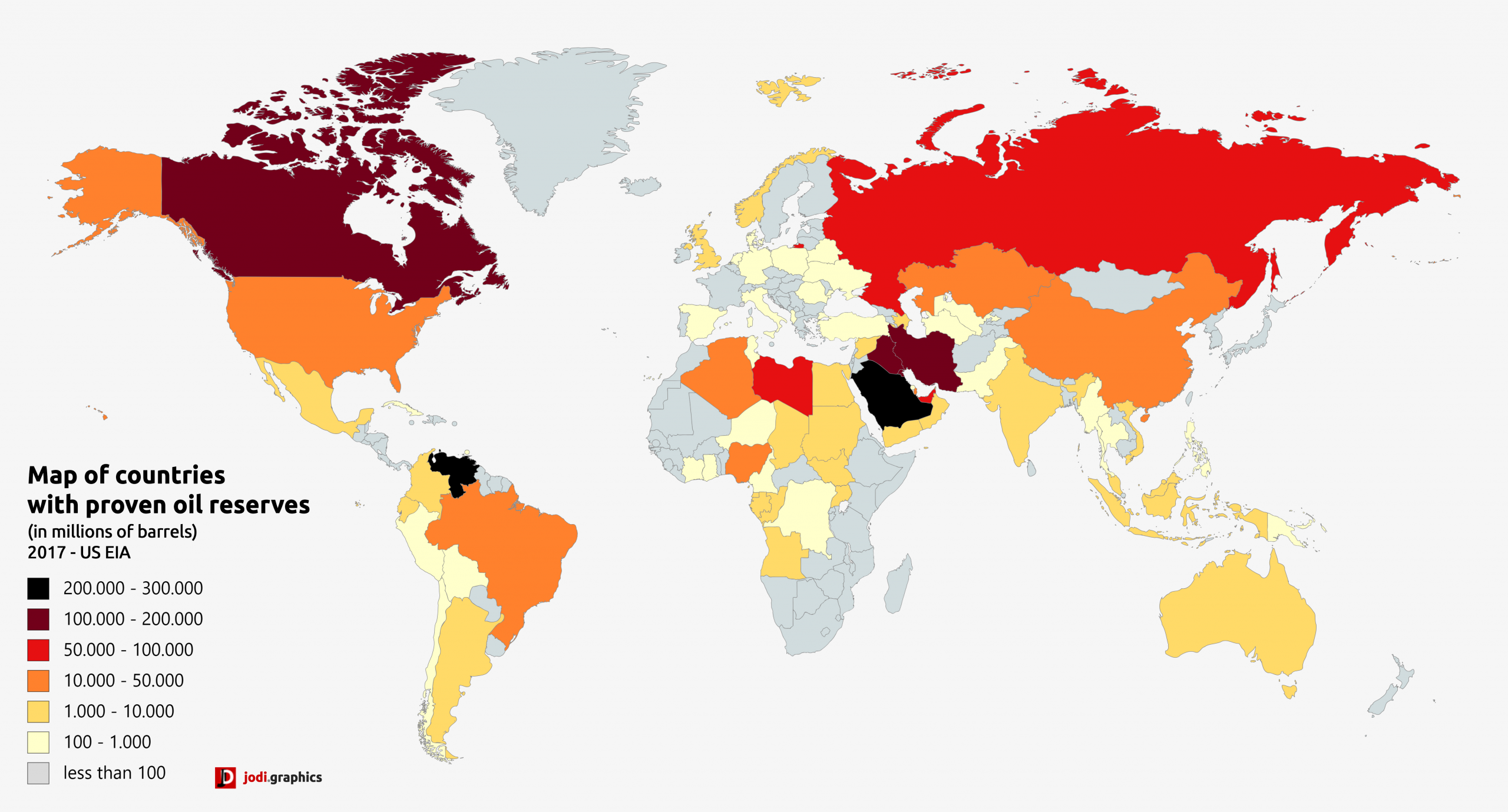
Credit: Jo Di Graphics, CC BY-SA 4.0, via Wikimedia Commons
---2017---US-EIA---Jo-Di-graphics.jpg)
This theoretical gap in economic thinking leads to miscalculations regarding the future of growth. As hydrocarbons become harder to extract, the net energy available to subsidize society decreases. Modern wealth is measured in currency, yet that currency represents a claim on future energy. As energy availability plateaus, our economic assumptions will collide with the immutable laws of thermodynamics.
Let’s consider the story of human technological progress through the lens of thermodynamics. Traditional energy sources like wood and wind possessed low energy density and limited scalability. Coal provided the high-density thermal energy required to power the steam engine and automate mechanical work. This transition enabled the mass production of steel and the creation of rail networks, while the energy surplus from coal subsidized the development of mechanical engineering and chemistry.
The discovery of petroleum introduced a liquid fuel with even higher energy density and superior transportability compared to coal. This subsidized the transport revolution by enabling the internal combustion engine. Petroleum became the foundational input for the automotive, aviation, and shipping industries, acting as a high-density portable battery that allowed for globalized trade and the rapid physical expansion of urban infrastructure.
This subsidy feeds a population that would have been impossible 100 years ago thanks to advancements in industrial agriculture involving diesel, fertilizers and pesticides derived from petroleum. In 1918, German chemists Fritz Haber and Carl Bosch pioneered a method to synthesize ammonia by forcing atmospheric nitrogen and hydrogen to react under intense pressure and heat via natural gas. This breakthrough bypassed the ecological limits of natural fertilizers. This subsidy removed the biological limits on population growth and freed a larger percentage of the population to engage in digital and high-tech research rather than manual food production. Before this shift, around 90% of the human population was required for food production.
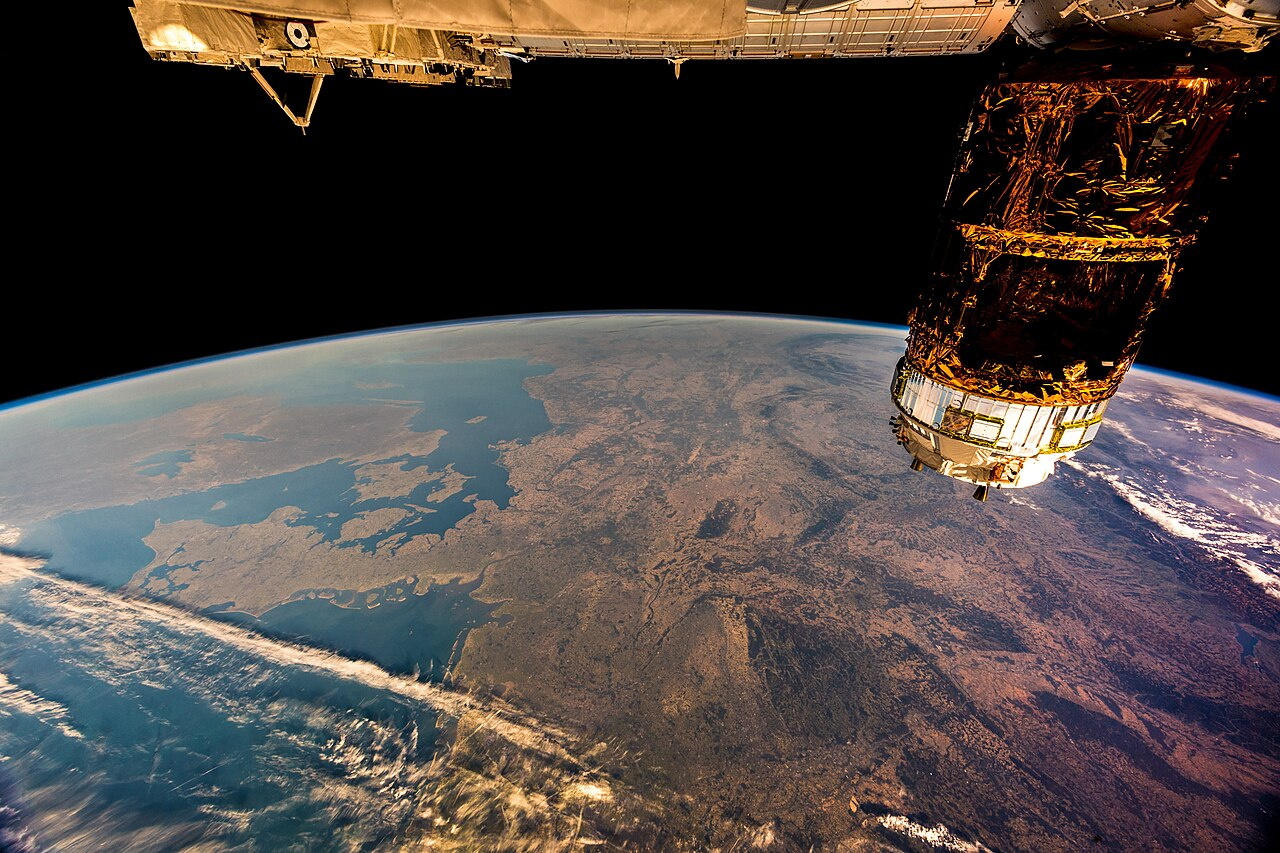
To put this in perspective, when scientists recently analyzed the scenario where Europe’s natural gas was disrupted or completely cut off and replaced with wood energy, they estimated that the accelerated, unsustainable logging needed to replace it would obliterate European forests within just a few years. According to satellite data, the loss of biomass in EU’s forests had already increased by 69% in the period from 2016 to 2018, compared with the period from 2011 to 2015.
Credit: Alexander Gerst, CC BY-SA 2.0 https://creativecommons.org/licenses/by-sa/2.0, via Wikimedia Commons
The physical layout of modern civilization itself is a spatial manifestation of hydrocarbon energy density. Urban sprawl and the separation of residential and commercial zones are only possible due to the high energy-to-volume ratio of liquid fuels, which allow for rapid, individualized transport over vast distances. The infrastructure is constructed from concrete and steel, the production of which requires temperatures exceeding 1,400°C. These extreme temperatures are only economically viable through the combustion of coal and natural gas. Physical infrastructure, including bridges, roads, and power grids, carries a “maintenance debt.” Economic theory treats these as one-time capital investments, but they are decaying structures that require continuous subsidies of fossil energy.
The dramatic extension of human life expectancy over the last century is also a direct byproduct of hydrocarbon-derived technologies. Modern sanitation systems rely on massive amounts of energy for pumping and high-strength concrete for infrastructure. Most pharmaceutical inputs are derived from petrochemicals, as the synthesis of antibiotics, analgesics, and complex biologics requires fossil fuel reagents and precision temperature controls. The global distribution of vaccines and temperature-sensitive medicines depends on a continuous cold chain of refrigeration powered by the grid and diesel transport. This infrastructure ensures that the benefits of medical advancement are physically deliverable to a global population.
Commercial aviation for passengers and freight is possible thanks to high density jet kerosone fuel. Alternative fuels are economically unviable in this fiercely competitive industry due to costs 2x to 10x higher than kerosene and a continued reliance on hydrocarbon-based manufacturing, though options like Bio-SAF from waste oils, E-Fuels from captured CO2, Liquid Hydrogen for new engine designs, and Electric Batteries for short-range hops exist as inferior technical replacements. Jet fuel packs a massive amount of power into a small, relatively light volume, whereas batteries are currently about 40 times heavier for the same amount of energy. Because aircraft must lift their own fuel weight to stay airborne, switching to a less dense power source means sacrificing either passenger capacity or travel distance.
Mainstream economic theory still clings to the myth of “decoupling,” where GDP growth is separated from energy consumption. The reality is international trade is the movement of “embodied” hydrocarbons; a product manufactured in one country and sold in another contains the invisible fossil fuel energy used for its extraction, fabrication, and transport. Advanced economies only appear decoupled because they offshore energy-intensive manufacturing to developing nations. The global logistics system relies entirely on the low cost and high density of bunker fuel for maritime shipping. This subsidy allows for the geographic fragmentation of manufacturing, creating a system of energy arbitrage.
The mid to late 20th century’s “digital revolution” was physically underwritten by these same resources. High-heat industrial processes for purifying silicon and rare earth metals require consistent, high-intensity thermal energy that are only cost efficient thanks to coal or natural gas. High-precision manufacturing equipment depends on petroleum-based lubricants with specific viscosity profiles that are difficult to replicate with synthetics at scale. The casing, circuit boards, and insulation are all petroleum derivatives.
The latest phase of AI innovation is nonsensical without these ongoing hydrocarbon subsidies. AI demand is reversing a decade-long trend of flat electricity demand. Measured in cost per square foot, data centers are the most expensive construction projects in human history. Thermodynamic intensity sets it apart from previous technological shifts. AI data centers consume significantly more energy per square foot than a traditional cloud storage facility, with high-density AI racks requiring over 100 kW of power each. Approximately 30% to 40% of a data center’s total energy is used solely for cooling. The Department of Computer Science and Technology at the University of Cambridge found this heat output creates “data heat islands,” increasing local land surface temperatures by an average of 2°C (up to 9°C in extreme cases) and affecting areas up to 10 km away. The rapid turnover of hardware needed to support increasingly powerful algorithms drives up the demand for hydrocarbon-dependent mining and manufacturing processes.
Data centers are projected to consume up to 12% of total U.S. electricity by 2028, a rapid growth that strains grids. The massive “weightless” mega-capital of technology corporations is subsidizing the next generation of energy technology. However, this progress is physically bounded; every petabyte of AI training represents “embodied energy” derived from the fossil fuel processes used in construction and hardware manufacturing. The construction of a single hyperscale data center requires thousands of tons of steel and concrete, both produced via high-heat industrial combustion. The cost is estimated at 20 million dollars per megawatt for fully realized hyperscale campuses. Annual capital maintenance and operational expenses typically consume between 8% and 12% of the total original investment to upgrade short-lived IT hardware every three to five years and maintain complex power and cooling infrastructure to prevent “catastrophic” outages that can now cost upwards of one million dollars per event.
Renewable capacity has expanded significantly but remains dependent on fossil fuels. Construction of wind turbines, solar arrays, and high-voltage transmission lines relies on steel, cement, and maritime logistics—sectors that are currently 80% to 95% powered by hydrocarbons. This is a complexity trap where more energy must be spent on solving energy-related problems, such as energy intensive nuclear reactor construction, lithium recycling or carbon border adjustments, potentially reducing the net energy available.
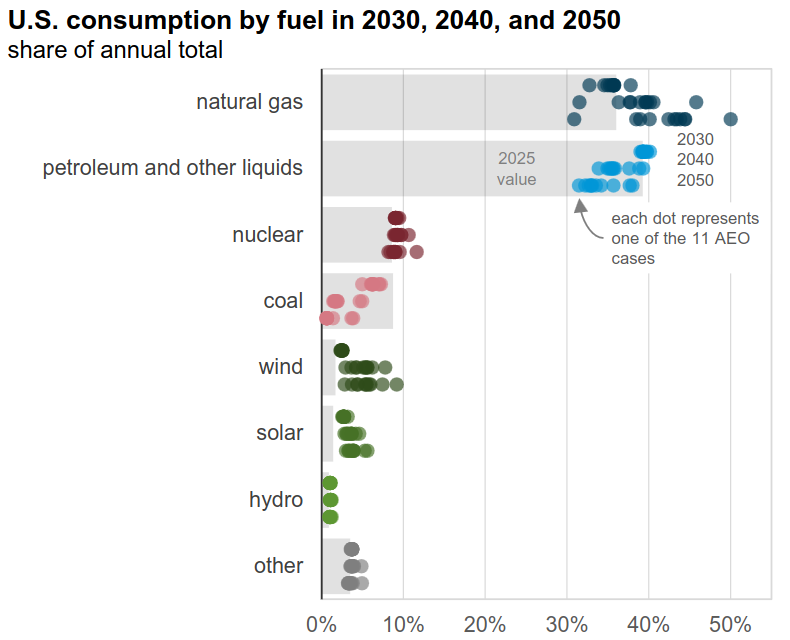
Social contract theory and democratic stability are predicated on the assumption of continuous growth, which has served as the mechanism to resolve class conflict by expanding the total resource pool rather than redistributing existing assets. The era of expanding civil rights and social safety nets and globalization coincided with the era of peak EROI. As the energy surplus shrinks, the ability of governments to fund social programs without increasing debt decreases. Modern financial systems are based on debt, which is a promise to pay back principal plus interest using future energy. When future energy availability declines, repayment costs spiral.
The invisible economic ledger of capitalism will inevitably be altered to obey the immutable laws of thermodynamics.